21 August 2011

Week 23: Road Trip to Salvador Bahia, Day 1: Brasilia to Seabra


For our summer vacation, we decided to spend a week in Salvador, Bahia. This would be our first big trip in Brazil outside of the Federal District. We were fairly excited about making this trip and getting to play on the beach, but we received conflicting reports on Salvador. Nearly everyone commented on how beautiful and historic this city is, but it also has a problem with crime. They were especially worried when they found out that we were going to drive there.

Despite all the warnings of the terrible road conditions on Brazilian highways, especially during the rainy season, and having to share the roads with large trucks, and the lack of services on route, we chose to drive our minivan. For one thing, airplane tickets for eight were too expensive, and then we wouldn't get to see the country.

In preparation for the drive, we purchased a Brazilian travel guide called Guia Quatro Rodas. This book lists all the major cities and tourist towns with hotels, tourist sites and restaurant information, and it included a highway map. One of the most striking things about the map was the large amounts of empty space in Brazil. Between the suggestions in the book and on their website we choose to go a northern route through Bahia on the way to Salvador, and return by a southern route through Minas Gerais. Both are very large states.


The drive turned out be absolutely beautiful and lush with green plants. Road conditions were good to very good for most of the drive. They seem to have been repaved sometime during the last three years.

We left Brasilia early on Saturday morning and were able to catch sun rising over a misty valley below the dam of Lake Paranoa. As we drove through the north part of Goias state and into Bahia, the scenery of vast stretches of farmland with grass and tree covered hills dominated the view. We managed to take a few photos along the way from the car. The grass along side the road very tall, up to six feet at times, and it was sometimes difficult to see the fields beyond. Farms at this time of the year were mostly planted with soybeans and corn, and we saw a few banana plantations and managed eucalyptus forests as well.


Our destination for the first day of driving was to Seabra, Bahia, where I had made reservations at a pousada. The most difficult part about making hotel reservations at the family run hotels here is arranging for the 50% deposit. Bank transfer is the main way that people pay bills here, and this is the only reason that I maintain a local bank account. 

Along the way, we passed through several small towns, some with very large gas stations and maybe a hotel or two. Along the highway, there are people with food stands and small diners or bars in addition to tire repair shops. 


One of the funniest things we saw were signs in the restrooms at the truck stops giving instructions on how to use a toilet. There were variations on these signs, but they all pretty much ask that one not use the floor or the sink, and to be sure to throw trash in the garbage pail. At one of the gas stations we stopped at, I did see a young man urinating in the shower drain, so there does seem to be a need for instructions. There also seem to be a need for literacy. 


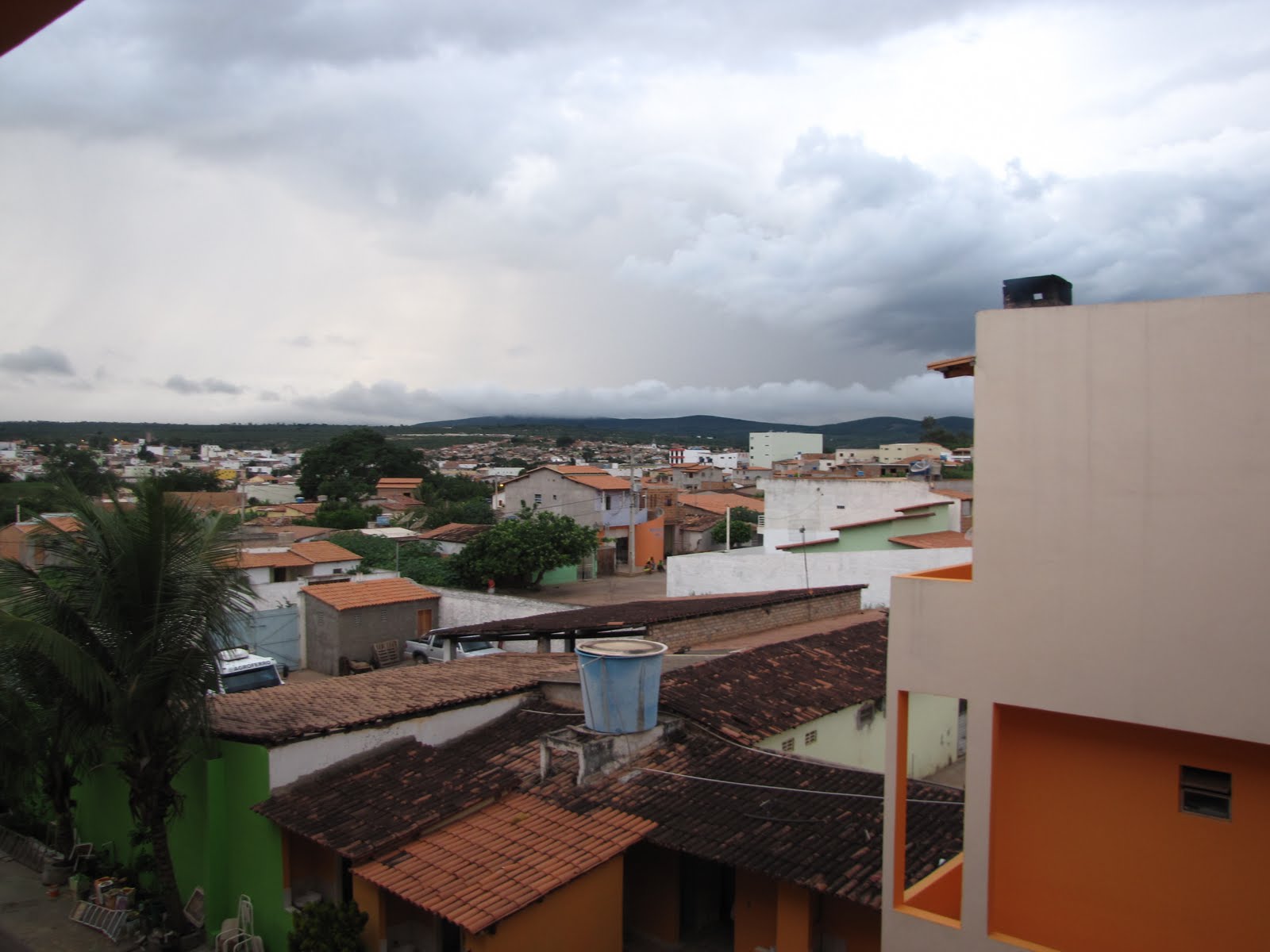
We arrived at the Pousada Seabra around 5:30PM. It was about a 13 hour drive from Brasilia, and we managed to get there before the sun set. We also gained an hour when we entered Bahia. Seabra is a crossroads town called the gateway to the Diamontina National Park. It is probably the largest town on this stretch of highway, and there are several hotels. We found this one through its website, which is no longer functioning. It also happened to be the bus stop and ticket counter for several cross country bus lines. The restaurant here is self-serve traditional Brazilian food and quite tasty. The rooms could accommodate anywhere from 2 to 16 people. 


When we had reserved our room, we had requested two adjoining rooms on the ground level. When we got there, they had one room saved for us on the ground level, and the other on the third floor. We told them that that would not work for us, so we go moved to two rooms that were near each other on the third floor.


One of the reasons we picked this hotel was because it had a parking area. With the cars of all the other guests, it was a little difficult to maneuver our van in, but we managed. I think I only crush one curb and a planter in the process. I also ended up parked next to the building with the wash rooms behind the kitchen used by the bus travelers.  At night, the gate to the parking area was closed and locked, and there were other cars double parked in the aisle.

This was our first experience staying in an inn that middle class Brazilians would stay in. Our only other Brazilian hotel experience was at a four-star hotel paid for by United Airlines when we had to stay the night in Sao Paulo. The Pousada Seabra definitely lowered our expectations on what hotels in Brazil were like.


The first thing to remember about the hotels is to ask if sheets and towels were provided. Pousada Seabra did provide a top sheet, blanket and pillow for each bed. What was surprising is that not every bed had a mattress. In each of the two rooms, the queen-size beds had a pillow-top mattress cover stretched over a  plywood box. We chose to use those beds for suitcases.


After the long drive, it was nice to just sit down and play some games. This lasted until we were too tired and annoyed with each other to do more. It was also about the time the music from the bars next door was shut off. None of us showered because didn't feel like cleaning the mold off the showerhead.


Our last surprise occurred during the night. We got a heavy rain shower and learned that the disadvantage of being on the top floor was being near the roof. It was noisy, but it also leaked. Fortunately, none of our stuff got very wet since it was on the plywood box beds. It was enough rain to leave significant puddles on the floors. 


13 August 2011

Week 53: One Year in Brazil


We've been in Brazil for a year now, and I still feel like I'm in a foreign country.

It's hot and dry in the afternoons, cool at night, brush fires light the night and a haze of smoke rests on the horizon making for beautiful sunsets. There is a perpetual covering of ash and red dust on our floors and windows, and imprints from reddened feet on the white cupboards in the kitchen. I pay bills through a bank, eat fresh tropical fruits every day, and shop at Sam's Club and Walmart to buy cuts of meat with strange names, shapes and smells.

Paper money is brightly colored, coins of the same value have different shapes and sizes, and cashiers never seem to have exact change. The garbage gets collected every night, and walls and gates surround every home like fortresses. There are no squirrels, but rodents the size of Labrador retrievers swim in the lake and monkeys pass through the trees in the back yard.

The local food is savory and salty, and is available by the kilo or all-you-can eat, and there are even places where the waiters will keep bringing food until you get up and leave, all for one price and even split 20 ways. But a large pepperoni pizza at Pizza Hut costs about US$30 and Big Mac value meal goes for US$12, which puts makes them affordable only as special treats.

Some day, it will rain again, and the grasses will green and the trees will grow new leaves. In the meantime, we will enjoy the yellow, pink and purple flowers of the trees that are now blooming and wait for the fresh mangoes, jubiticabas, acerolas, pitangas and papayas.

It has been a good year, and I am looking forward to another one here in this city of the future, prophesied by a priest and realized by a president, here in the middle of Brazil.

Week 36: 8 months in Brazil


My preschooler recently had a discussion with her mom about missing her friends back in the U.S. She was lamenting not having any best friends in Brazil and how much she missed her good friends in the U.S. She could only remember one name of a friend from the U.S., and that was of her cousin whom she has only met six or seven times. Since she mentioned her cousin, her mom talked about how we would return to the States, and we would eventually see her cousins again. As my daughter thought about the possibility of seeing her American friends and cousins again, she became sad. She told her mother that it wouldn't be any good to see them again because they would not understand her. By then she would only know how to speak Portuguese.

10 April 2011

Week 22: Secretary of State Visit

Unfortunately, I don't have any pictures from my point of view of the Secretary Clinton's visit, but I did get a chance to participate. I was assigned as the baggage officer and was responsible for getting the advance team's luggage onto the official airplane for the trip back to Washington, DC. We had got back and forth on whether a bag handlers were needed, but we decided it would be smoother to get the advance team's bags onto the airplane while they were doing their work for the inauguration events rather than doing it at the end of the day when they were trying to get off the ground. I am glad to have had the experience because it gave me an introduction on the step-by-step planning that goes into a major visit. This was one only lasted one day, and it still took over a week of meetings and site visits to prepare.

After going to the hotel to pick up the bags, we returned to embassy to have the bags and the all of the motorcade cars inspected and sniffed by the bomb dog. Bomb dogs are way cooler than X-ray machines. Then, I spent most of my day for the inauguration at the airport waiting for the Secretary's airplane to arrive, get refueled and loaded for the return trip. I rode in the motorcade to the airport in an armored van with the other two members of the baggage handling crew. 

Since I was at the airport, I got to see the airplane land and listen to the reports from the site officers as they reported the step-by-step movement of the Secretary as she went to the pre-determined inauguration events. I even got to go up into the official aircraft and get tour. It's a well-laid-out aircraft that is very a much a place of business. It was interesting to me that other than a few technology upgrades, the basic plan was very similar to the Air Force One planes that are display at the Air Force Museum in Dayton, Ohio.

My last highlight of the day was watching the motorcade of the former Brazilian president enter the air base for his last official trip out of Brasilia. Lining the street just outside of the entrance was a group of supporters wishing him well and thanking him for a job well-done.

Week 22: Presidential Inauguration Day


January 1st is the day declared by the Brazilian Constitution to have the Presidential Inauguration. This happens every four years, and happens to fall on one of the most celebrated of the Brazilian holidays, but that's how it is here.

This year was a particularly significant day since the person being sworn into office would be Brazil's first woman president, Dilma Rousseff. It was a hotly contested campaign, and she was the former chief of staff for Brazil's most popular president ever, Lula da Silva. Due to the importance of this day, the U.S. Secretary of State, Hillary Clinton, was one of the several hundred foreign dignitaries that came to congratulate President Dilma and participate in the ceremonies.

We decided that this would probably be a once in a lifetime event for our children, so we made our way down to the Esplanada to partcipate in a few of the many activities and concerts that had been set up for this special day. Even the Brazilian Communist party was celebrating, as noted by the balloons and flags that lined the route to the government buildings where the inauguration would take place. The color red is the color of the PT, the worker's party, that won the election.


On the fields across from the congressional buildings, there were several pavilions and tents set up, each representing one of the regions of the Brazil. Also, there were large signs with pictures and stories about historically significant Brazilian women.

I didn't a chance to do much more than bring my family to the sites since I had to get back to the embassy to join with the rest of the embassy team that was meeting Secretary Clinton at the the airport. I'll write a little bit more about that later. 


The first place we stopped was the children's pavilion, and at that time a musical group was performing music in support of a puppet show. I have no idea what the puppet show was about, but it reminded me of the Punch and Judy puppets. 


After I returned to the embassy, my family went to a couple of the other pavilions to see some of the other demonstrations and shows. The group in this photo were representing an indigenous tribe from the Amazon. As they sang, they invited members of the audience to join with them as they moved rhythmically in a circle. The older woman doing the singing also did some improvisational songs that praised the new Brazilian president.


My family's favorite show was by a group of Ukrainian-Brazilian dancers from the south of Brazil. We knew that Brazil is a population made of people from all over the world, but seeing a Ukrainian folk dancing helped to sink in the message. This community has made it a distinct goal to try and preserve traditions from their homeland, and it really reminded me of the cultural celebrations that we have in Cleveland, which is another community made of cultures from around the world.


The most exciting moment of the outing came when my youngest son got separated from the rest of the family. As they were moving from one pavilion to another, it started to rain very hard, and so everyone moved under the closest tent. During this mass movement, my wife noticed that our son was no longer with them, so she told the rest of the kids to stay put while she hunted for him. She found a nearby police officer and used her Portuguese to describe the missing kid: short blonde hair wearing blue Crocs with socks. (Definitely not similar to any of the Brazilian kids that day. The socks were the giveaway feature.) Anyway, they returned to the pavilion my family had previously visited and our boy was still there. I think he might have just been noticing that he was not with the family. Fortunately, everyone was very helpful in helping us to get our boy back.

Week 35: Heavy rains and trees


When we first moved into our home, this tree looked dead, with just a single trunk and a few branches with no leaves or buds or any outward sign of live. In the picture of the pool, the tree is in the upper left part of the photo. For most of the rainy season, the tree has produced leaves and filled out, but it was only a couple of weeks ago that an orange bloom appeared at the very top of the tree. I think that this might be some sort of sumac based on the leaves.


The flower its very interesting, too. It is large and is shaped like a scoop. It also has several flowers that bloom and then drop in sequence. I am not sure how long the blooms last, but the tree seems to be perpetually in flower once it gets going.


Another aspect of the rainy season is the amounts of rain we receive. In the picture above, the water in the swimming pool has reached the rim representing about 8 inches of rain that came during about five days of brief but very heavy showers. One of these showers produced some local flooding and power outages. So far this year we've had about three or four outages in our home per month. Only one has lasted more than an hour, and we were without power for about 6 hours. It may have been caused by an vehicle accident that involved a pole and that occurred during a heavy rainstorm.


Here are few more pictures from the trees next door. When I first saw this type of tree, I thought that there was a flock of birds roosting in it. On closer look, the white flecks are some sort of flower or seed pod. It really is beautiful here now.


Sometime in the next month, the daily rainstorms will stop, and the world will dry up and become brown and red. The birds here even have plumage that blend in with the red soil. The bird in this photo are a very common bird here that spends a lot of time on the ground searching for bugs to eat. They also hang out at the embassy near the cafeteria at lunch time and takes uneaten bits of meat off of abandoned plates.

03 April 2011

Week 34: Ovos de Pascoa--Easter Eggs


A couple of days after Carnaval, these canopies of beautifully wrapped eggs started to appear in the supermarkets. About a week ago, Rebecca and I stopped in at the Walmart Supercenter and saw the largest display of chocolate Easter eggs we have seen yet in Brasilia and decided that our kids needed to share in this cultural experience.
These egg displays were larger than any similar Christmas display we saw.


In this Walmart, the displays extended from the seasonal display area by the electronics department near the entrance of the store, around a corner and all the way down and past the 13 or so cash registers. The eggs were arranged by brand, size and type, and most of them were hanging from a canopy. Others were in bins and on shelves next to the canopies. There was even a castle of candy and eggs.


The eggs ranged in size from 100g to 1000g, and prices ranged from about R$6 to R$70 depending on the size, brand and contents of the egg. The eggs themselves were made from the popular types of chocolate candies, and most of them contained wrapped chocolates and/or little toys inside as well. For example, the Sonho de Valsa (Waltz Dream) is a popular chocolate covered wafer ball filled with honey-peanut butter flavored truffle-like filling. The egg is chocolate lined with a crunchy peanut and honey flavored coating, and filled with Sonho de Valsa candies.


Nestlé, Garoto, and Laka brands each had representatives under the canopy to assist customers with locating eggs and prices. To find prices from the store's selection, you needed to refer to laminated signs hanging from the canopy. The Nestlé girl even had a fanny pack filled examples of the toys one might find inside of the eggs. Laka's rep handed out a pamphlet that described the various eggs from their line. He even helped find a couple of small boxes to carry our eggs in.


We ended up purchasing 11 eggs, 8 for us and 3 to send to family and friends back in the U.S. We arranged a "secret" exchange and had our family members choose a name out of the hat, and then find an egg that that person might like. We're not so good at keeping the secret part of the exchange, so the kids made sure that they let the others know which eggs would be acceptable, and which would not. We thought we might be a little unusual in purchasing so many eggs at one time, but we saw at least two other customers with boxes filled with eggs for giving away. It ended up being a fun field trip for our family.